
The person behind Catapult Conversations
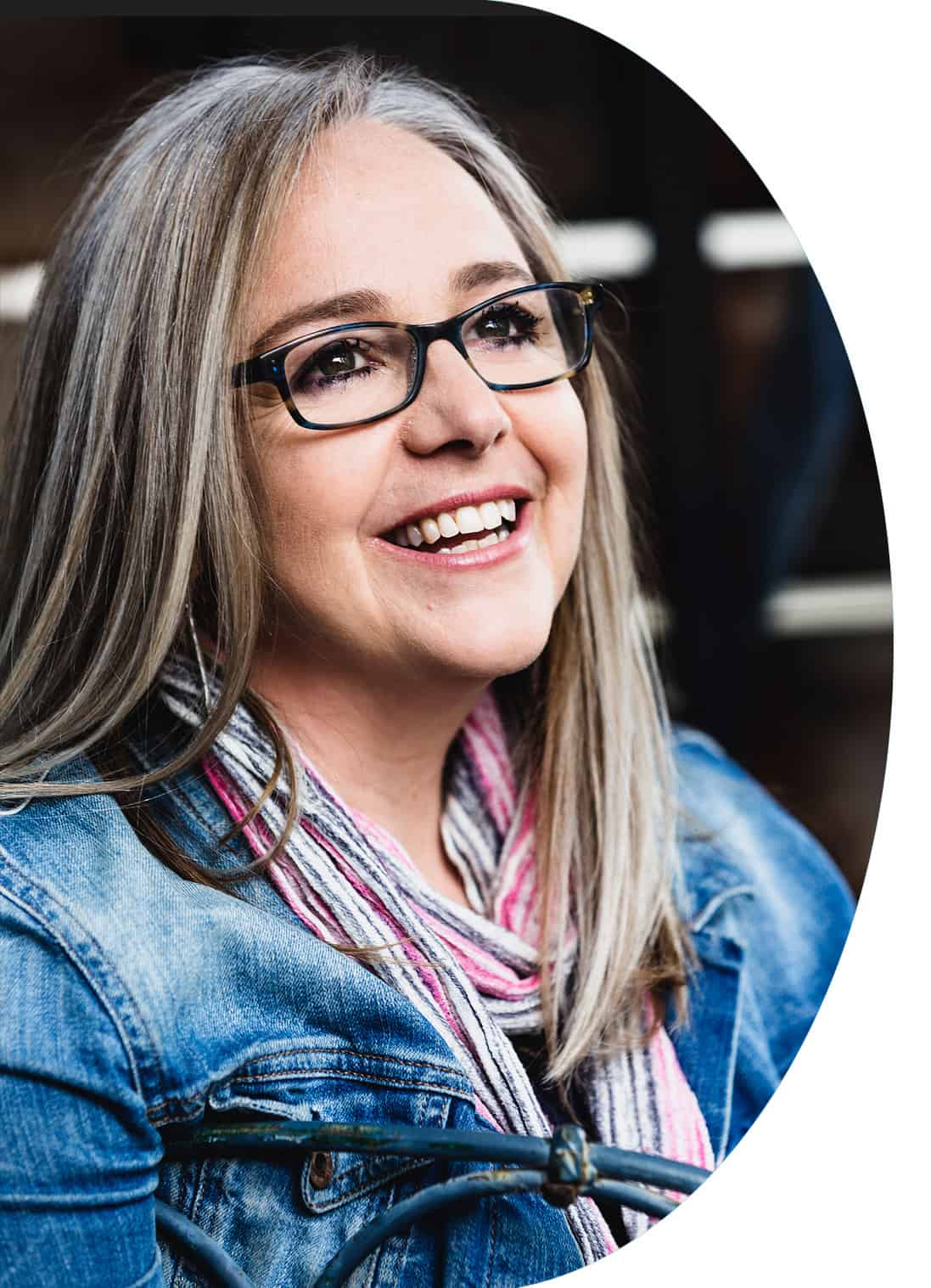
Dr Katy Abbott
I didn't start composing until I was 27. By the time I finished my PhD I had three children, including twins, and a career that had taken wonderful, dreadful, and unexpected turns. I was richer for them.
Starting music later than most meant I had to find my own way through, because many of the traditional pathways were not available to me. This developed in me an unusual way of creating pathways for myself and others — following inklings, and linking them to what I began to see in my peripheral vision.
I had a wonderful tenured university position on the composing staff and left it, not because anything was wrong, but because I could see I could make a bigger impact outside it than inside. That was a big, scary step, and I made sure I grieved it properly before I could move freely away from it.
I've overridden myself and my own intuition more times than I'd like to admit, and learned, usually the tricky way, what that costs (and also how it has been of benefit). I've negotiated commissions, managed relationships with orchestras and funding bodies, raised three boys, held a portfolio career across composing, teaching, and mentoring, and built something that is distinctly mine, despite my quiet nature.
I've learned that as a fierce-hearted, soft-souled person, there's usually a different (let's call it colourful) way for me to do what's mine, rather than the path I thought I should take.
This is the background I bring to every Catapult Conversation.
Why this work
Mentoring inadvertently grew from the same impulse as the composing. Both involve listening for what's present but not yet clear. Both require patience with ambiguity, a willingness to sit inside complexity without rushing to resolve it, and a genuine fascination with what makes people who they are.
I keep finding myself in conversations with wonderful, generous, high-achieving people who are tangled or unclear. They don't lack talent or drive but the things holding them back are invisible to them; patterns, obligations, overriding their sense of knowing. And a scrambling to keep finding ways to boost their capacity.
As a neurocomplex person with a portfolio life, I understand competing priorities, caring responsibilities, and the plethora of overthinking and good intentions that accompanies a bucket load of ideas.
What I've learned through my own life and three decades of conversations with other people is that the distance between who you are and what's yours to do is almost always smaller than it looks.
And that closing it doesn't require you to become someone else. It requires you to remember who you already are.
How the work, works
I offer an artistic lens and capacity applied to human complexity. A Catapult Conversation isn't a method or just a simple conversation. What I seek to bring to a Catapult Conversation (Program) is more like what an editor brings to a manuscript.
A good editor doesn't rewrite. They read at a structural level what the author cannot access from inside the writing. They see the shape of the whole thing, where it's pulling against itself, where the real argument is hiding in a footnote or in plain sight and speaking it back in a way that makes the whole thing legible.
The manuscript doesn't change in that moment. But the author does.
It requires seeing across multiple registers simultaneously and synthesising it into a clear observation.
In any tangle there is usually a thread that, if found and pulled, releases the whole knot. It's usually not the most visible thread or the most distressing one. But it's the right one. Pulling the right thread doesn't aim to 'add' but it removes the interference.
The experience behind Catapult Conversations Programs
I've mentored hundreds of creatives through my teaching, academic, and industry roles across the last 25 years including over 60 (mostly) women through the 6-month intensive program CATAPULT Residency. I've served as Lead Mentor for the Melbourne Symphony Orchestra's Cybec 21st Century Australian Composers Programme in 2024 and remain an Honorary Senior Fellow at the University of Melbourne, where I spent more than a decade on academic staff.
I hold Practitioner Certifications in Playing Big (Tara Mohr), Emotional Agility (Prof. Susan David, Harvard), and Driven Resilience Coaching, alongside my PhD from the University of Melbourne. These sit underneath the work rather than on top of it.
I'm also a composer with five solo albums, commissions from Australia's major orchestras and ensembles, and the 2024 Melbourne Symphony Orchestra Composer-in-Residence. More about that at katyabbott.com.
'Katy is one of those rare individuals who sees the deeper meaning in the everyday and has the ability
to get to the heart of the matter and the person, with gentle and genuine care'.
Catapult Conversations
A Catapult Conversation is not another course you complete and move on from. It is a quality of conversation; warm, honest and precise, and they always begin exactly where you are.
Every Catapult Conversation has two elements, not necessarily in order and not always beautifully separated. The first is illumination; hearing what sits beneath the surface, naming what is already there, seeing the pattern or the identity or the thing you keep circling back to that makes sudden sense when someone says it plainly. The second is movement; always practical, doable, designed by us together using impactful tools and a proper unique-to-you strategy for what's next. It's important to me that anything we do must fit the life of each person rather than the other way around.
A catapult doesn't push. It suspends and uses the tension. Then it releases.
Big Leaps. Gently.


© 2026 Katy Abbott Studio. All rights reserved. | Privacy Policy | T&C
Catapult Conversations is the mentoring practice of Dr Katy Abbott · katyabbott.com